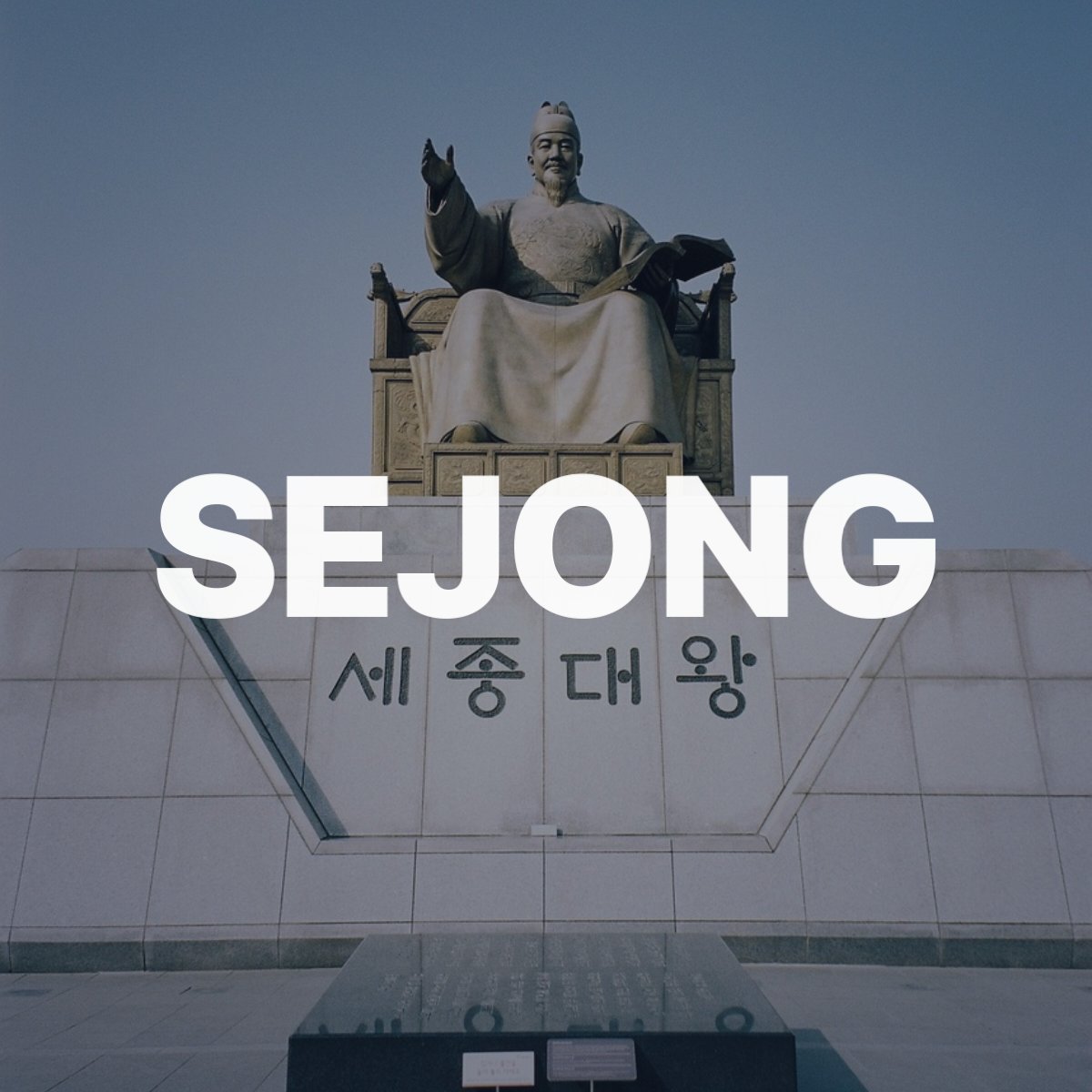
Why Sejong the Great Created Hangul: 5 Reasons and Historical Impact
Have you ever wondered why Sejong the Great remains one of Asia’s most celebrated monarchs nearly 600 years after his reign? Sejong the Great (1397–1450) transformed Korea through unprecedented innovations in language, science, and governance. This article reveals how Sejong revolutionized Korean civilization by creating Hangul, advancing scientific discovery, and establishing administrative systems that still influence modern Korea. I’ll explain why Sejong’s legacy matters today, how his achievements shaped Korean identity, and what lessons his leadership offers. By the end, you’ll understand why UNESCO recognizes Sejong as a transformational historical figure whose impact extends far beyond Korean borders.
Who Was Sejong the Great and Why Did He Matter to Korean History?
Sejong the Great was the fourth king of Korea’s Joseon Dynasty, reigning from 1418 to 1450. His contributions fundamentally altered Korean civilization across three dimensions: language, science, and administration. Sejong created Hangul, the Korean alphabet, which democratized literacy and transformed Korea’s cultural identity forever. According to the Korean Historical Society, Sejong’s reign marked the longest period of sustained innovation in Korean history, with over 200 major scientific and administrative reforms implemented during his 32-year rule. This wasn’t merely a royal hobby—Sejong established a dedicated research institution called the Hall of Worthies (Jiphyeonjeon) where scholars developed new technologies including the world’s first rain gauge and advanced astronomical instruments.
Sejong’s vision extended beyond immediate governance. He actively recruited talented individuals regardless of social class, a revolutionary practice for the 15th century. The king personally reviewed scientific projects, participated in policy debates, and encouraged intellectual discourse among his advisors. Sejong demonstrated that a ruler could transform society by investing in knowledge creation rather than military expansion alone. Therefore, historians recognize Sejong as the architect of Korea’s intellectual golden age, establishing frameworks for innovation that persisted long after his death.
The significance of Sejong’s reign lies in his holistic approach to nation-building. Rather than viewing governance as a single domain, Sejong integrated language policy, scientific advancement, and administrative reform into a unified vision. This interconnected strategy produced compound effects—Hangul enabled broader literacy, which supported scientific dissemination, which improved administrative efficiency. UNESCO’s recognition of Sejong’s heritage site acknowledges this rare combination of cultural, scientific, and governmental achievement concentrated in a single reign. His influence shaped not only Korea but also influenced East Asian civilization through his documented scientific methods and philosophical approach to inclusive governance.
How Did Sejong Create Hangul and What Problems Did It Solve?
Sejong created Hangul in 1443, officially announcing the alphabet in 1446 through the document “Hunminjeongeum” (The Proper Sounds for the Instruction of the People). Before Hangul, Korea used Chinese characters (Hanja), which required years of study and limited literacy to the elite aristocratic class. Sejong recognized this fundamental problem: most Korean people couldn’t read or write because Hanja was linguistically mismatched with Korean phonetics and required enormous memorization effort. Hangul solved this problem by creating a phonetic writing system specifically designed for Korean language structure, reducing the time required to achieve literacy from years to days or weeks.
| Aspect | Hanja (Chinese Characters) | Hangul (Korean Alphabet) |
|---|---|---|
| Learning Time | 5-10 years minimum | Days to weeks (wise person: 1 day; ordinary person: 10 days) |
| Character Count | 2,000+ characters required | 24 basic letters (originally 28) |
| Literacy Rate Potential | Limited to elite (5-10%) | Accessible to masses (60%+) |
| Linguistic Match | Misaligned with Korean phonetics | Perfectly aligned with Korean sounds |